 difterm.com
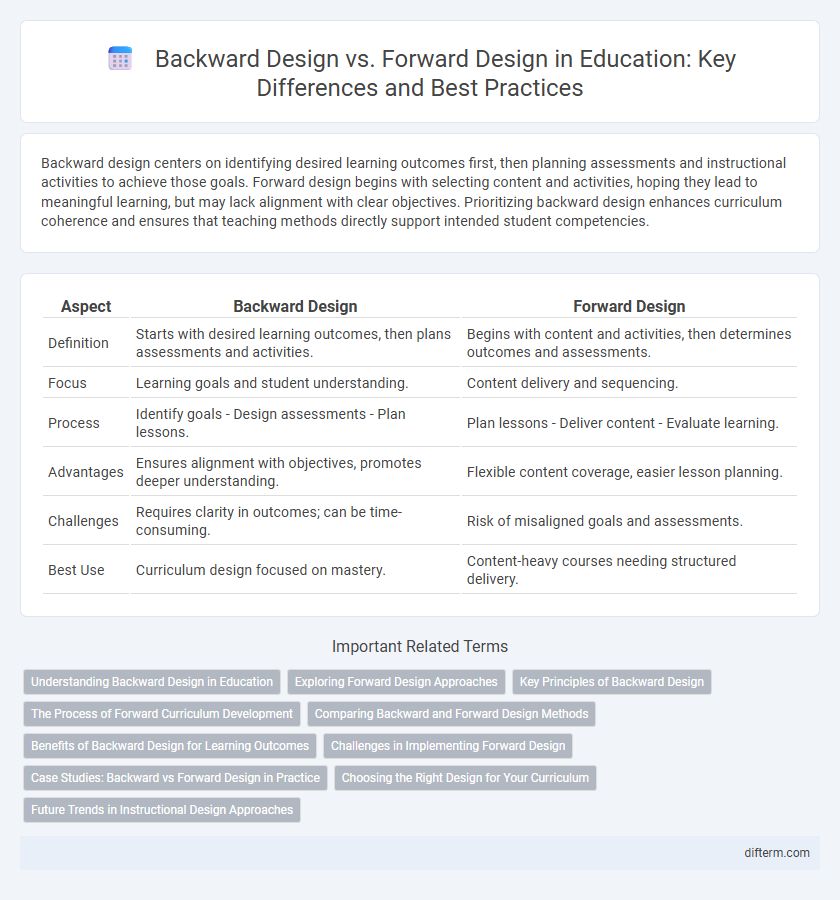
 Backward design centers on identifying desired learning outcomes first, then planning assessments and instructional activities to achieve those goals. Forward design begins with selecting content and activities, hoping they lead to meaningful learning, but may lack alignment with clear objectives. Prioritizing backward design enhances curriculum coherence and ensures that teaching methods directly support intended student competencies.
Table of Comparison
| Aspect | Backward Design | Forward Design |
|---|---|---|
| Definition | Starts with desired learning outcomes, then plans assessments and activities. | Begins with content and activities, then determines outcomes and assessments. |
| Focus | Learning goals and student understanding. | Content delivery and sequencing. |
| Process | Identify goals - Design assessments - Plan lessons. | Plan lessons - Deliver content - Evaluate learning. |
| Advantages | Ensures alignment with objectives, promotes deeper understanding. | Flexible content coverage, easier lesson planning. |
| Challenges | Requires clarity in outcomes; can be time-consuming. | Risk of misaligned goals and assessments. |
| Best Use | Curriculum design focused on mastery. | Content-heavy courses needing structured delivery. |
Understanding Backward Design in Education
Backward design in education begins with identifying desired learning outcomes and then planning assessments and instructional methods to achieve those goals, ensuring alignment throughout the curriculum. This approach prioritizes clear objectives and measurable results, facilitating deeper student comprehension and more effective teaching strategies. By focusing on the end goals first, educators can create coherent and purposeful learning experiences that directly target essential knowledge and skills.
Exploring Forward Design Approaches
Forward design approaches in education emphasize starting with specific learning activities and content before defining desired outcomes, fostering flexibility in curriculum development. This method allows educators to adapt instructional strategies based on available resources and student needs while maintaining engagement through sequenced lessons. Exploring forward design reveals its strength in iterative refinement, promoting responsive teaching aligned with classroom dynamics and formative assessments.
Key Principles of Backward Design
Backward design centers on identifying desired learning outcomes before planning instructional activities and assessments, ensuring alignment with educational goals. It emphasizes starting with clear objectives, determining acceptable evidence of learning, and then developing relevant teaching strategies. This approach fosters purposeful curriculum development that prioritizes student understanding and mastery.
The Process of Forward Curriculum Development
Forward curriculum development begins with identifying specific learning objectives, followed by designing instructional activities and assessments that align with those goals. This process emphasizes a logical sequence where content delivery drives the formation of evaluation methods, ensuring that teaching strategies match the curriculum's intended knowledge and skills. Educators prioritize a step-by-step progression from content introduction to mastery assessment, facilitating clear instructional planning and learner engagement.
Comparing Backward and Forward Design Methods
Backward design emphasizes starting with learning outcomes and assessments to guide curriculum planning, ensuring alignment between objectives and instructional activities. Forward design begins with the content and teaching strategies, often leading to a less focused alignment with desired student outcomes. Research shows backward design enhances curriculum coherence and improves student mastery compared to forward design approaches.
Benefits of Backward Design for Learning Outcomes
Backward design enhances learning outcomes by prioritizing clear, measurable goals that align assessments and instructional activities with desired results. This strategic approach fosters deeper understanding and skill mastery, reducing wasted time on irrelevant content. Educators using backward design create more focused, effective curricula that improve student performance and engagement.
Challenges in Implementing Forward Design
Implementing forward design in education often faces challenges such as limited flexibility in accommodating diverse student needs and unpredictable learning outcomes. Teachers may struggle with resource constraints and insufficient training to develop effective sequential lesson plans aligned with future assessments. These obstacles can hinder the consistent execution of forward design, affecting curriculum coherence and learner engagement.
Case Studies: Backward vs Forward Design in Practice
Case studies comparing backward design and forward design reveal distinct impacts on curriculum effectiveness and student outcomes. Backward design emphasizes starting with learning goals and assessments, leading to targeted instruction that aligns with desired competencies. In contrast, forward design often begins with content delivery, which can result in less coherent learning experiences and lower goal alignment.
Choosing the Right Design for Your Curriculum
Backward design centers on identifying desired learning outcomes first, then planning assessments and instructional activities, ensuring alignment with clear educational goals. Forward design begins with selecting content and materials, followed by developing lessons and assessments, which can risk less cohesive alignment with learning objectives. Choosing the right curriculum design depends on prioritizing clarity of goals and assessment methods (backward design) or content sequencing and delivery (forward design) based on instructional needs and desired student outcomes.
Future Trends in Instructional Design Approaches
Backward design focuses on setting learning outcomes first, ensuring curriculum aligns with desired skills and assessments, while forward design starts with instructional content and teaching activities. Future trends in instructional design emphasize hybrid approaches that integrate backward design principles with adaptive learning technologies and data analytics. This combination promotes personalized, outcome-driven education tailored to evolving learner needs and digital environments.
Backward design vs Forward design Infographic