 difterm.com
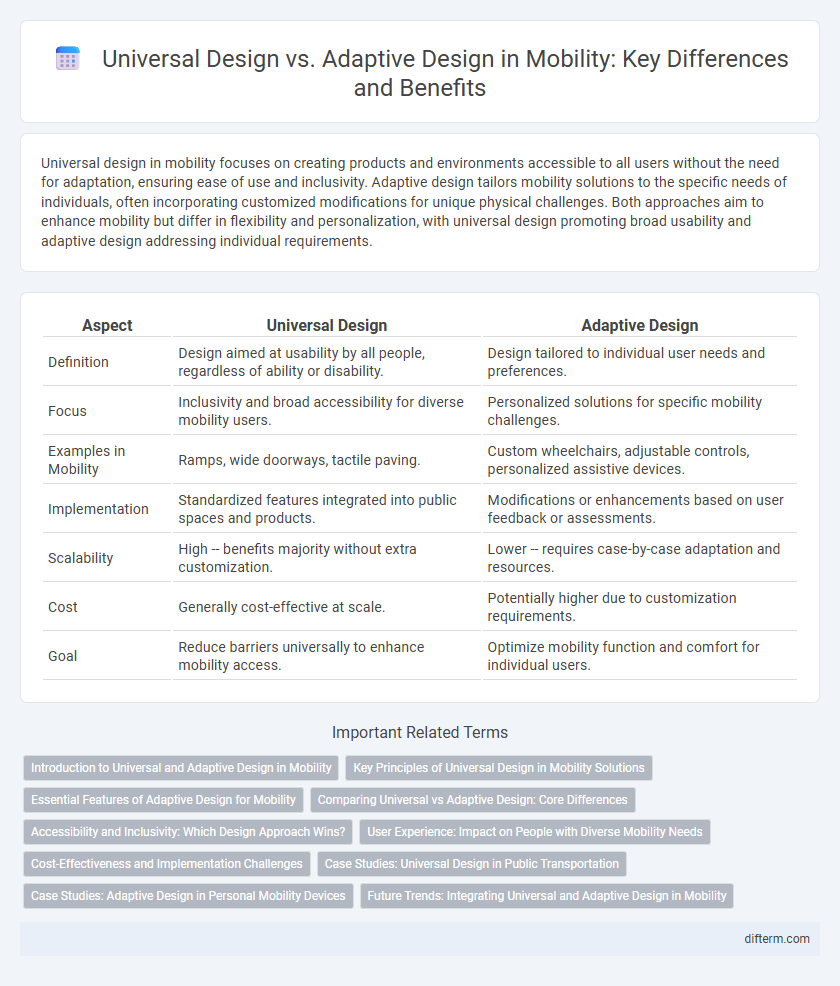
 Universal design in mobility focuses on creating products and environments accessible to all users without the need for adaptation, ensuring ease of use and inclusivity. Adaptive design tailors mobility solutions to the specific needs of individuals, often incorporating customized modifications for unique physical challenges. Both approaches aim to enhance mobility but differ in flexibility and personalization, with universal design promoting broad usability and adaptive design addressing individual requirements.
Table of Comparison
| Aspect | Universal Design | Adaptive Design |
|---|---|---|
| Definition | Design aimed at usability by all people, regardless of ability or disability. | Design tailored to individual user needs and preferences. |
| Focus | Inclusivity and broad accessibility for diverse mobility users. | Personalized solutions for specific mobility challenges. |
| Examples in Mobility | Ramps, wide doorways, tactile paving. | Custom wheelchairs, adjustable controls, personalized assistive devices. |
| Implementation | Standardized features integrated into public spaces and products. | Modifications or enhancements based on user feedback or assessments. |
| Scalability | High -- benefits majority without extra customization. | Lower -- requires case-by-case adaptation and resources. |
| Cost | Generally cost-effective at scale. | Potentially higher due to customization requirements. |
| Goal | Reduce barriers universally to enhance mobility access. | Optimize mobility function and comfort for individual users. |
Introduction to Universal and Adaptive Design in Mobility
Universal design in mobility aims to create environments and products accessible to all users regardless of ability, incorporating features like ramps, tactile paving, and adjustable seating. Adaptive design customizes mobility solutions to individual needs, such as personalized prosthetics or tailored wheelchair modifications, enhancing user comfort and functionality. Both approaches address accessibility but differ in scope: universal design emphasizes inclusivity from the outset, while adaptive design focuses on specific user adaptations.
Key Principles of Universal Design in Mobility Solutions
Universal design in mobility focuses on creating transportation systems and environments that are accessible and usable by people of all ages, abilities, and disabilities without the need for adaptation or specialized design. Key principles include equitable use, ensuring that mobility solutions cater to diverse users; flexibility in use, allowing for varying preferences and abilities; simple and intuitive operation to reduce complexity; and perceptible information, providing clear communication regardless of sensory abilities. Prioritizing tolerance for error and low physical effort enhances safety and comfort, making mobility universally accessible and inclusive.
Essential Features of Adaptive Design for Mobility
Adaptive design in mobility prioritizes personalized solutions that adjust to individual user needs, including customizable seating, adjustable control interfaces, and modular components that accommodate varying physical abilities. Essential features of adaptive design ensure enhanced accessibility by enabling real-time modifications, such as pressure relief systems and alternative input devices for propulsion or navigation. This approach contrasts with universal design by emphasizing user-specific adaptability to optimize comfort, independence, and functional mobility performance.
Comparing Universal vs Adaptive Design: Core Differences
Universal design in mobility emphasizes creating environments and products accessible to all users without the need for adaptation, promoting inclusivity through inherent features like curb cuts and wide doorways. Adaptive design focuses on modifying or customizing mobility aids and spaces to meet specific individual needs, such as adjustable wheelchair ramps or personalized assistive devices. The core difference lies in universal design's proactive approach for broad usability, while adaptive design provides reactive solutions tailored for particular users.
Accessibility and Inclusivity: Which Design Approach Wins?
Universal design promotes accessibility by creating environments usable by all people without adaptation, ensuring inclusivity from the start. Adaptive design modifies existing spaces or products to meet specific needs, offering tailored solutions but potentially limiting overall accessibility. In mobility, universal design generally wins for fostering broad inclusivity and reducing barriers, while adaptive design serves as a valuable complement for unique requirements.
User Experience: Impact on People with Diverse Mobility Needs
Universal design in mobility creates environments and products accessible to the widest range of people, including those with diverse mobility needs, without requiring adaptation or specialized design. Adaptive design customizes solutions specifically for individuals, offering personalized mobility aids or modifications to address unique physical challenges. User experience improves with universal design through ease of use and inclusivity, while adaptive design enhances comfort and functionality for individuals by addressing particular limitations.
Cost-Effectiveness and Implementation Challenges
Universal design in mobility emphasizes creating environments accessible to all users from the start, offering cost-effectiveness by reducing the need for multiple modifications and lowering long-term maintenance expenses. Adaptive design involves customizing solutions for specific disabilities or changing needs, often leading to higher implementation costs due to specialized equipment and frequent adjustments. Challenges in adaptive design include scalability and integration into existing infrastructure, while universal design faces fewer structural modifications and promotes inclusivity across diverse populations.
Case Studies: Universal Design in Public Transportation
Universal design principles in public transportation enable seamless access for all users, including those with mobility impairments, by integrating features like level boarding, tactile surfaces, and audible announcements. Case studies from cities such as Stockholm and Toronto demonstrate that incorporating universal design reduces barriers and promotes independence without stigmatizing users. Adaptive design solutions often target specific disabilities but can lead to fragmented service, whereas universal design fosters inclusivity and operational efficiency across diverse mobility needs.
Case Studies: Adaptive Design in Personal Mobility Devices
Adaptive design in personal mobility devices emphasizes individualized solutions tailored to specific user needs, enhancing functionality for diverse physical abilities. Case studies demonstrate how customizable features, such as adjustable seating, modular controls, and sensor-based assistance, significantly improve user independence and comfort. These innovations contrast with universal design's broad usability approach by prioritizing personalized adaptability to optimize mobility outcomes.
Future Trends: Integrating Universal and Adaptive Design in Mobility
Future trends in mobility emphasize integrating universal design principles with adaptive design solutions to create inclusive transportation systems that cater to diverse user needs. Smart technologies, such as AI-driven interfaces and IoT-enabled infrastructure, enable dynamic responses to individual mobility challenges while maintaining accessibility standards. This convergence promotes seamless navigation and enhanced independence for persons with disabilities, elderly populations, and varied mobility requirements.
Universal design vs Adaptive design (mobility context) Infographic